
 HOTLINE:+8613974960765 +8618507312158 HOTLINE:+8613974960765 +8618507312158


— Knowledge —
— PRODUCTS —
 Service Hotline +8613974960765
Email:susie@hnljpump.com
Mobile:+8618507312158
TEL:+8613974960765
vertical turbine pump
Publication date:2025/4/23 17:14:22 popularity: [content:visits]
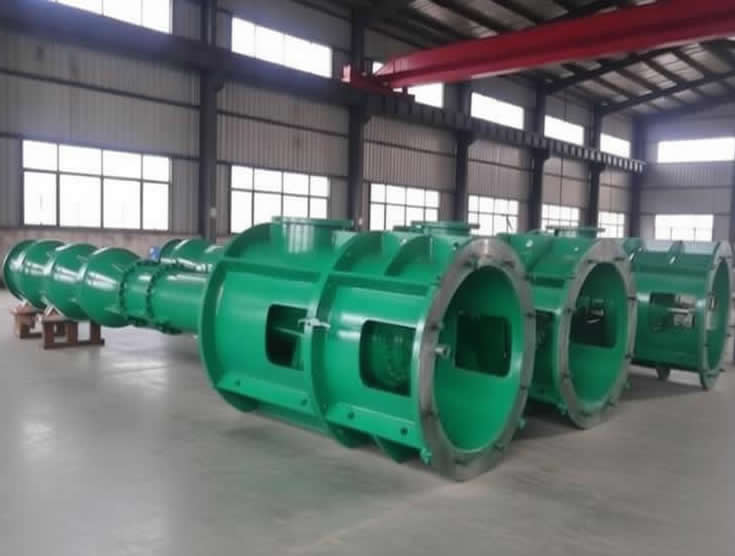
In the petrochemical industry, fluid conveying systems are responsible for transporting flammable, explosive, highly toxic, and strongly corrosive media, and their safety standards far exceed those of general industrial scenarios. The vertical submerged long-shaft Multistage turbine pump, with its unique structure featuring "dry motor installation and deep submerged operation of the pump body," has become a core equipment for achieving intrinsic safety in this field. Its core value lies not only in its conveying capacity, but also in the establishment of a systematic safety defense line ranging from explosion-proof certification, zero-leakage sealing, to corrosion-resistant material selection.
The primary line of defense lies in the compliance construction of the explosion-proof system. Petrochemical plant areas are often divided into hazardous zones such as Zone 0 (with continuous presence of explosive gases) and Zone 1 (with occasional presence), based on the "GB 3836.1-2010 Explosive Atmospheres Part 1: Equipment - General Requirements" and the international standard ATEX. The drive motors for pumps must obtain corresponding explosion-proof certification. The industry predominantly adopts the Ex dⅡB T4 level certification, indicating that the motor has a "flameproof" (d) protective structure, capable of withstanding internal explosions without propagating flames to the external environment. It is suitable for Class IIB (such as ethylene, propylene, etc.) gas environments, with a maximum surface temperature not exceeding 135°C, which is sufficient to avoid the ignition temperature of most hydrocarbon media. Some high-end projects (such as offshore platforms, LNG terminals) even require the Ex dⅡC T6 level to cope with more flammable media such as hydrogen and acetylene. The vertical long-shaft pump provided by Hunan Kailite Pump Industry for a Sinopec refining and chemical project has its motor certified to Ex dⅡB T4 and adopts an IP55 protection level, ensuring long-term stable operation of the electrical system in coastal environments with high humidity and high salt spray. Explosion-proof certification is not only a prerequisite for entry but also the starting point for system safety design. It requires the entire pump assembly - including junction boxes, cable entry devices, and coupling guards - to comply with explosion-proof specifications, forming a "full-system explosion-proof" closed loop.
On the basis of explosion protection, zero-leakage sealing technology serves as the second lifeline for ensuring personal safety and environmental compliance. Once petrochemical media such as gasoline, benzene, and hydrogen sulfide leak, they are highly prone to cause fires, explosions, or acute poisoning. Traditional packed seals or single-end mechanical seals face a high risk of failure due to wear, thermal deformation, or media crystallization during long-term operation. In this scenario, vertical long-shaft pumps commonly adopt double-end mechanical seals, supplemented by a barrier sealing system. The double-end seal consists of two pairs of opposing rotating and stationary rings, with an isolating liquid (usually clean white oil, water, or nitrogen) injected in between at a pressure 0.1~0.2 MPa higher than the media pressure. This isolating liquid forms a "hydraulic barrier" that, on one hand, prevents the leakage of high-risk media, and on the other hand, lubricates and cools the sealing end faces, extending their lifespan. When transporting strong corrosive media such as concentrated sulfuric acid and liquid chlorine, the sealing ring material is selected as silicon carbide (SiC), which is high in hardness, corrosion-resistant, and has good thermal conductivity. When paired with an impregnated resin graphite stationary ring, it exhibits a low friction coefficient and an extremely low wear rate. In a project of a large chemical enterprise transporting 98% concentrated sulfuric acid, the SiC/SiC double-end seal + nitrogen barrier sealing system was adopted, achieving a measured leakage rate of less than 0.5 ppm (parts per million), far below the industry's stringent standard of 1 ppm, and maintaining continuous operation for over 24 months. Furthermore, to address the characteristics of media prone to crystallization or high viscosity, some systems adopt bellows mechanical seals. These utilize elastic bellows instead of traditional springs, eliminating the risk of spring blockage or corrosion failure due to crystallization, achieving a "spring-free" seal and further enhancing reliability.
The third line of defense is the material matrix of the flow passage components, which directly determines the service life of the pump in strongly corrosive environments. The composition of petrochemical media is complex, ranging from light hydrocarbons to concentrated acids, alkalis, and sulfur compounds, making it impossible for a single material to be universally applicable. Selection must follow the principles of "medium characteristics priority, temperature matching, and economic balance." For 98% concentrated sulfuric acid, Hastelloy C-276 is recognized as the "corrosion-resistant king" in the industry. This nickel-molybdenum-chromium alloy forms a dense passivation film in high-temperature concentrated sulfuric acid, exhibiting excellent resistance to pitting, crevice corrosion, and stress corrosion cracking. Its corrosion rate under 98% sulfuric acid and 100°C conditions is less than 0.05mm/a, significantly better than that of 316L stainless steel (>1mm/a). In a sulfuric acid storage tank bottom suction project of a petrochemical enterprise, the use of C-276 material for the impeller, pump casing, and shaft resulted in no signs of corrosion after five years of continuous operation, while the 316L pump used during the same period suffered from perforation and leakage within 18 months. For caustic soda (NaOH) solutions, especially high-temperature (>80°C) and high-concentration alkali solutions, titanium alloy TC4 becomes the preferred choice. The TiO₂ oxide film formed on the surface of titanium in alkaline environments is extremely stable, with a tolerance concentration for NaOH up to over 50%. Moreover, its density is only 57% of steel, significantly reducing the weight of the pump body. In the electrolyte circulation system of the chlor-alkali industry, titanium alloy pumps have become standard equipment. For crude oil, saltwater, or acidic gas field water containing chloride ions, 2507 super duplex stainless steel, with its high chromium, molybdenum, and nitrogen content, a pitting resistance index (PREN) >42, and superior resistance to Cl⁻ stress corrosion cracking compared to 316L, has become the mainstream base material for pump casings and guide vanes. To handle slurry media containing solid particles, such as crude oil containing iron sulfide, tungsten carbide (WC) ceramic coatings are often sprayed onto the 2507 substrate. The coating hardness reaches HRC70 or higher, and its wear resistance is improved by more than three times, achieving a dual effect of "corrosion resistance + wear resistance.". In extreme corrosive environments, such as devices containing HF acid, perfluoroalkoxy resin (PFA) or polytetrafluoroethylene (PTFE) lining becomes the ultimate solution. Its corrosion resistance covers a pH range of 0-14, with no metal contact at all, achieving "zero corrosion" transmission. This precise matching system of "material-operating condition" based on medium characteristics is the fundamental reason why vertical long-shaft pumps are irreplaceable in the petrochemical industry.
Related Recommendations

Service hotline
screenshots ,WeChat Scan the Qr Code
WeChat:ljpump6666